
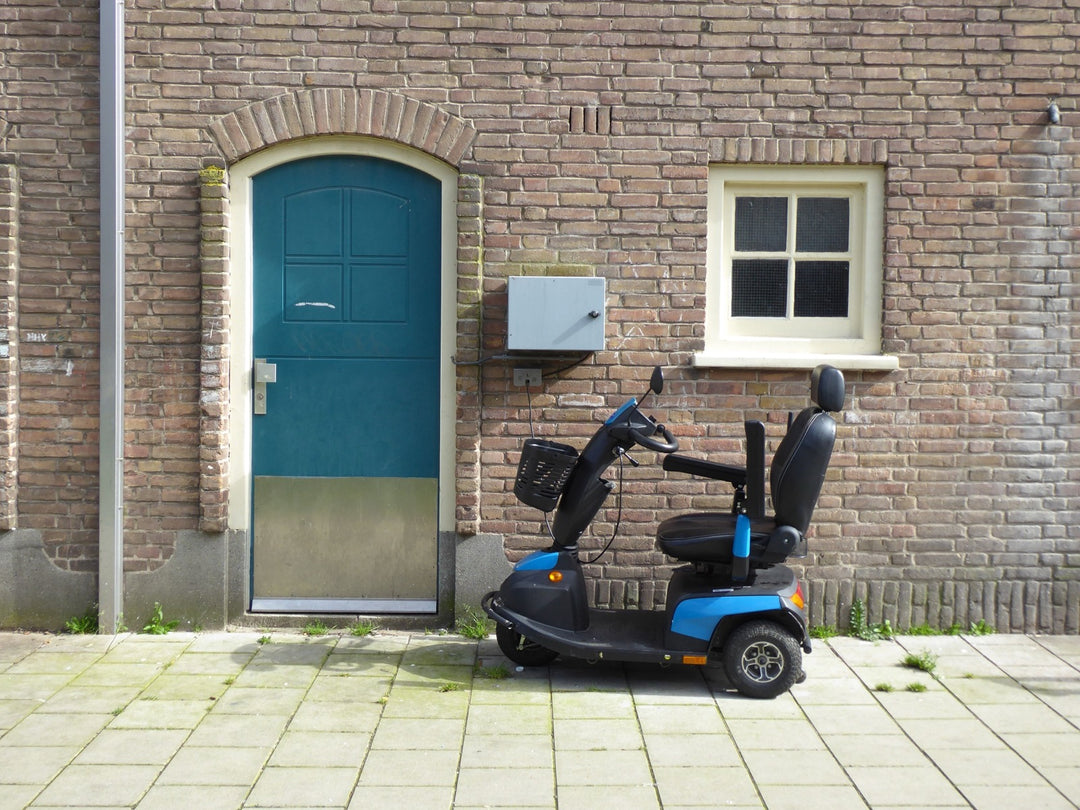
A scooter may suit you if…
- You can walk short distances and get on and off without help.
- Most trips are outdoors: shops, parks, neighborhood errands.
- You’d like a roomier seat and space for a basket.
- You have room at home to store and charge it.
Mobility
Both help you get out and about. The best fit depends on how you steer, where you’ll go, how you get on and off, and how the equipment will travel.

Side by side
General patterns, not rules. Individual models vary, so check the specifications of any product you consider.
| Feature | Mobility scooter | Folding power wheelchair |
|---|---|---|
| Steering | Tiller (handlebar) with thumb or finger levers | Joystick, mountable on the left or right |
| Who it typically suits | People who can sit upright, steer with both hands and transfer independently | People who need more seating support or find a tiller hard to use |
| Indoor use | Possible in larger spaces; needs a wider turning circle | Usually easier indoors thanks to a tighter turning circle |
| Outdoor comfort | Often a roomier seat and larger wheels for longer trips | Comfortable on paved routes; check guidance for slopes and grass |
| Getting on and off | Step on from the side; swivel seats help | Flip-up armrests and swing-away footrests help with transfers |
| Transport | Folds or separates into pieces; the heaviest piece is the key number | Folds as one frame; check the weight with the battery removed |
Scooter or power chair?

Neither is safer for everyone. Safety depends on the person’s balance, vision, reaction time and the routes they use. A physical or occupational therapist can assess which type suits the person.
Both can. Scooters often have a front basket and more space for bags; power wheelchairs are easier to maneuver in narrow store aisles.
It depends on the model. Compare the folded size and the weight of the heaviest piece someone will lift. Auto-folding models avoid latches but are usually heavier.